
At 4:01 a.m. on July 8, 2022, Jay Lee walked out of his apartment at the University of Mississippi wearing a robe, slippers and a gold bonnet. About two hours later, he left again, this time in his black Ford Fusion with the distinctive gold racing stripe on its hood. He never came home.
For the people who loved him, the first warning was not a crime-scene photograph or a threatening call. It was silence. Jay, a 20-year-old recent Ole Miss graduate who shared his location with his mother and posted constantly on social media, stopped answering. His dog, Lexi, was left alone inside his apartment. His phone disappeared. His car was found miles away.
The investigation would move through campus security footage, a difficult search for Snapchat data, a hidden screen name, a discarded car, a box truck, duct tape and a jury that could not agree. For two and a half years, Jay’s family had no body to bury and no answer to the question of what had happened to him.
Then the evidence changed. And eventually, so did the accused man’s story.
The Morning Jay Lee Vanished
On July 8, 2022, Tayla Carey texted her younger brother, Jay Lee, as she had done nearly every day since childhood. Their conversations were ordinary and intimate: where he was, what he was eating, what he planned to do the next day. They moved through life in real time, checking in step by step.
Jay was the youngest of Stephanie Lee’s four children. His mother worked as a retail manager. His father, Jimmy Lee, was a truck driver and minister. Jay spoke with his mother several times a day, and he had continued sharing his cell-phone location with her after leaving for college. The arrangement began in high school, a practical way for the family to keep tabs on one another.
That routine made the change difficult to dismiss.
Jay’s birthday text to his mother arrived at about 2 a.m. “It’s your birthday, lady,” he wrote. “I love you.” After that, there was nothing. Stephanie expected more contact. Jay would normally call, sing “Happy Birthday” and stay on the phone late into the night. Instead, his location was suddenly turned off.

Tayla contacted Jay’s college friend Jose Reyes. Jose had never had a conversation with Tayla before, which made the message stand out. She asked whether he had heard from Jay. Jose tried calling and texting, but the messages did not go through.
Nearly a day had passed since Jay’s last text to his mother when Jose drove to Jay’s campus apartment. He knocked. No one answered. But Jose could hear Lexi, Jay’s dog, on the other side of the door.
That detail mattered because Jay was known for taking Lexi everywhere. He brought her to shops, museums, road trips and even class. Friends said he would not normally leave her alone for that long. The dog’s presence, combined with Jay’s silence and the missing location data, made his absence feel out of character.

Stephanie contacted the University of Mississippi Police Department and requested a welfare check. Captain Jane Mahan, a 19-year veteran of the Ole Miss police force, sent officers to the apartment.
They already knew about Jay’s car: a black Ford Fusion with a gold racing stripe on the hood. It was not in the parking lot. Jay’s door was slightly open. Officers knocked, received no answer and went inside.
There was no obvious sign of a struggle. The apartment looked like a college student’s apartment, with food on the counter and Jay’s belongings still in his room. Police checked local hospitals and jails. They found nothing. They also learned that Jay had not shown up for work for two days.
A camera outside the apartment offered the first meaningful clue.

A Life That Was Suddenly Missing
The security footage showed Jay leaving his apartment at 4:01 a.m. on July 8. What he wore immediately drew attention: a robe, slippers and a gold bonnet. It looked less like a planned departure than a quick errand, or a person stepping outside with the expectation of returning.
About 30 minutes later, Jay came back inside wearing the same clothes. At approximately 5:58 a.m., he left again. This time, he got into his car and drove off campus. He did not return.
The clothing was unusual for Jay, who was known among friends for his fashion and his willingness to make a statement. He could walk Lexi in heels, wear bright colors and dress in ways that attracted attention. He was openly gay, a drag performer and a familiar presence in the Ole Miss community.

Jay had run for homecoming king at the university. His campaign brought backlash. Friends recalled people criticizing his clothing, using racist slurs and saying that his campaign did not represent Ole Miss. Jay did not win the title, but he used the experience to advocate for minority groups on campus and to speak about the right to participate openly in student life.
His sister described him as “unapologetically happy.” His father remembered a child who seemed determined to fight for himself from the beginning. Jay graduated among the top students in his high-school class and set an ambitious goal at Ole Miss: completing his degree in three years. He did.
He was also deeply connected to his faith. He grew up in church and gave testimonies on Sundays. His father said the confidence people saw in Jay was rooted in that faith. Jay was pursuing a master’s degree in social work and had interned with Oxford’s Child Protective Services. On the day he disappeared, he had organized a baby-formula drive for low-income families.

His mother knew he would not simply abandon the event.
The police released a missing-person poster two days after Jay vanished. It included his graduation photograph and a picture of his car. The disappearance became public, and calls began coming in by the hundreds. The strongest early lead came from a tow-truck driver.
Jay’s Ford Fusion had been found illegally parked at Molly Bar Trails Apartments, about two and a half miles from his campus apartment. The complex was outside the jurisdiction of University Police, so the Oxford Police Department became central to the investigation. Detective Ryan Baker took the lead.

Inside the car, investigators found Jay’s wallet, student identification, driver’s license and credit cards. They did not find the keys or Jay’s phone. The car was sent to the Mississippi Crime Lab, where investigators processed it for fingerprints and related evidence. The only fingerprints found were Jay’s. Investigators did not find another person’s prints, DNA or other clear indication that someone else had been inside.
Security footage showed the vehicle entering Molly Bar Trails at approximately 7:25 a.m., about an hour and a half after Jay had left campus. Glare and the angle of the camera made it impossible to determine who was driving.
The question was simple but important: Had Jay parked the car himself, or had someone else driven it there?

The Car at Molly Bar Trails
Jay’s family and friends searched Oxford and areas beyond the city. They rejected the idea that he had harmed himself. To those closest to him, Jay loved his life, his work, his plans and his people. His disappearance did not resemble a voluntary break from everything he had built.
His father searched wooded areas and followed tire marks near places where he feared Jay might have been left. He asked the public to speak up if anyone knew something or had seen anything. Oxford Police Chief Jeff McCutcheon updated the family daily and said the department had made a personal commitment to bring Jay home.
The case also carried a particular weight for Oxford’s LGBTQ community. Jay was openly gay and a well-known drag performer. Friends feared that he might have been targeted because of who he was and how openly he lived. The transcript describes Mississippi as a place without hate-crime laws specifically protecting LGBTQ residents and notes the community’s concern about violence against queer people.

Some friends also distrusted the justice system and worried about speaking with police. They feared that describing Jay as loud, young or difficult could be misunderstood as suggesting he was less deserving of attention. Others wondered whether a queer Black person would be treated with the same urgency as a more socially protected missing person.
Investigators said they considered every direction, including the possibility of a hate crime, but at first they had no clear answer.
Captain Mahan returned to the campus security footage. She noticed that Jay appeared to be holding an illuminated phone as he walked to his car. He held it in a way that suggested he might have been speaking with someone. That meant a person outside the frame could have been connected to his final known movements.
A friend, Khalid Fears, provided another piece of context. Before Jay disappeared, he told Khalid he was going somewhere he had already been that night, to see someone he had previously blocked on social media. The detail raised the stakes. Jay may have been going toward a known person, not into an unknown situation.
The investigation then produced a second surveillance puzzle.

The Jogger in the Summer Heat
At Molly Bar Trails, cameras captured a person running from the apartment complex. The individual was wearing a heavy gray hoodie with long sleeves and the hood up, despite the Mississippi heat in the middle of July.
Detectives tracked the person’s route through additional video. The individual stopped jogging after leaving the complex and walked toward a gas station. A white car pulled alongside, slowed, circled the lot and stopped near a pump. The person appeared to exchange words with someone in the car, got inside and left.
To investigators, the sequence did not look like an ordinary morning run. It looked like someone trying to leave the area without being seen. But detectives did not initially know who the person was, who had been driving the white car or whether either person had a connection to Jay.

The footage offered a possible explanation for the abandoned Ford Fusion: someone may have driven Jay’s car to Molly Bar Trails, left it there and then escaped in another vehicle.
The next challenge was digital evidence. Jay had used Snapchat during the morning he disappeared, but investigators feared that the normal warrant process would take too long. An emergency request to Snapchat was denied. Jay’s father also contacted Apple in an effort to obtain access to his son’s iPhone data. He described the experience as emotionally torturous after receiving conflicting information about whether the data could be released.
Investigators found another route. They obtained a search warrant for Jay’s Apple iCloud account and located passwords and user-account information. The university granted access to Jay’s college email account, allowing investigators to use Snapchat’s data-download function.
The download was incomplete. It showed messages Jay had received and the sender’s username, but it still gave detectives a crucial name. RedEye24.

The Snapchat Name RedEye24
The final message chain began at approximately 5:25 a.m. RedEye24 wrote messages including “Come back” and “You coming or nah?” The exchange suggested that Jay had met this person earlier and was upset about something that had happened between them.
The messages also appeared to show tension. Jay seemed to believe RedEye wanted to end contact. RedEye responded that Jay was “trippin’,” said they were still cool and wrote that he did not want to end things that way. At another point, RedEye texted, “Okay, I’ll do it,” apparently responding to something Jay had asked for.
Detectives considered whether the exchange involved a sexual encounter. The investigation later established that Jay met other men for sexual encounters, but the messages alone did not explain what happened inside the apartment where Jay was believed to have gone.

Around 6 a.m., investigators believed Jay was driving to meet RedEye while speaking with Khalid by phone. When Jay seemed to get close to his destination, the conversation ended. Detectives believed Jay then arrived at RedEye’s front door. One of the last messages he sent was a single word: “open.”
The federal warrant finally gave investigators more information about RedEye24. Snapchat provided an email address, and detectives found that the same address was connected to a podcast called Dirt to Diamonds. The host was Tim Harrington, a 22-year-old fellow Ole Miss graduate.
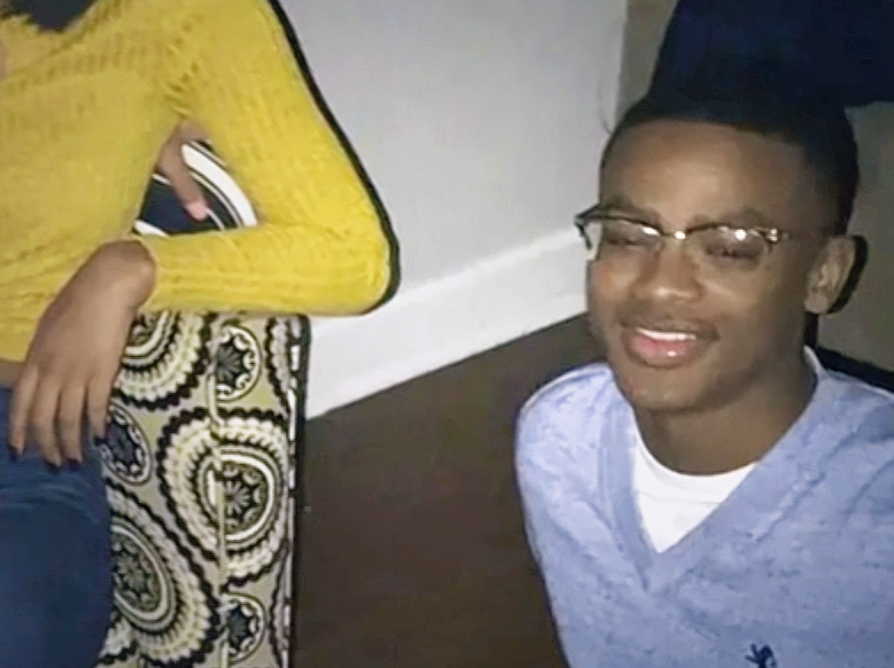
Tim’s public image did not immediately suggest violence. He was from Grenada, Mississippi, and, like Jay, was a preacher’s child. His grandfather was an influential bishop. Tim worked as a youth counselor, played guitar in his church band and started a moving company while still in college. Friends described him as outgoing and ambitious. He had spoken publicly about entrepreneurship, real estate and building a future for himself.
Jay’s former roommate, Braylon Johnson, had looked to Tim for advice. Tim had helped him think about staying out of trouble and handling poor grades. To Braylon, Tim was someone who took people under his wing.
The investigators now had to reconcile that reputation with the Snapchat messages and the surveillance evidence.

Tim Harrington Enters the Investigation
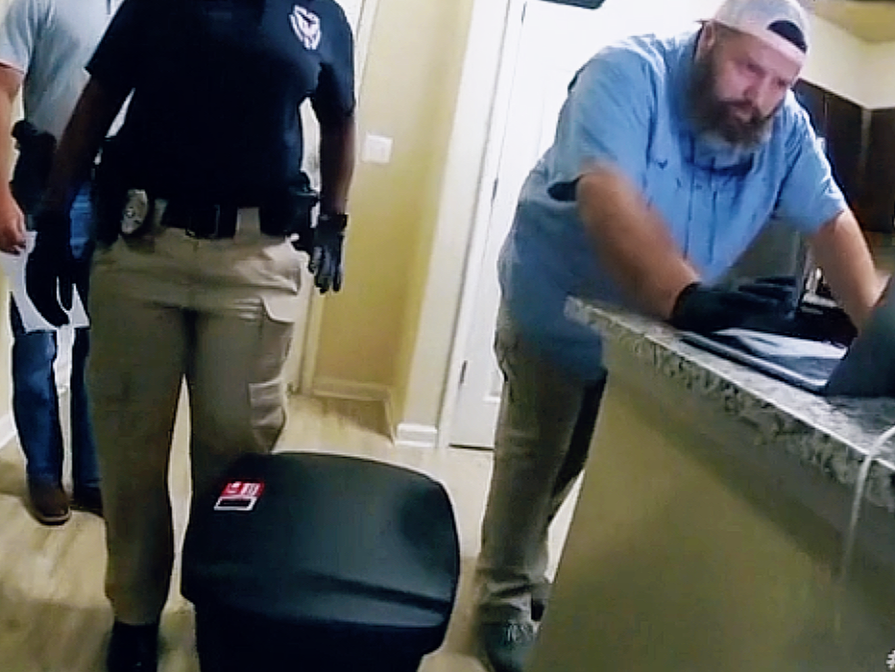
Two weeks after Jay disappeared, detectives went to Tim Harrington’s apartment with body cameras recording. Tim opened the door and allowed them inside. He said he knew Jay through the Black Student Union but described their relationship as casual, more acquaintance than close friendship.
The Snapchat messages suggested otherwise. Detectives believed Jay and Tim had a more personal relationship than Tim initially acknowledged. When investigators asked Tim whether he had any contact with Jay recently, he said he had not heard from him since Jay went missing. Then, when asked about the last time they had been in contact, he acknowledged seeing Jay that night—or, more accurately, in the early morning when Jay disappeared.
Tim said he was preparing to move to Dallas and had encountered Jay while looking for a drill. He said Jay later called and came by, bringing gifts. Tim characterized the visit as brief.
When detectives asked what he thought had happened to Jay, Tim suggested that Jay might have had casual sex with someone and been kidnapped. The answer stood out because it was unusually specific, even though investigators had not publicly established that possibility.

Police searched Tim’s apartment, car and moving truck. Initially, they found no blood, DNA or obvious physical evidence connecting him to a violent act. Tim said he had bought clear packaging tape for his moving business. Investigators later learned that he had purchased duct tape at Walmart after Jay entered his apartment.
Surveillance footage showed Tim leaving his apartment and going to Walmart. Investigators said he looked at the location of large trash cans, including one large enough to hold a body. He ultimately purchased duct tape. He then retrieved a box truck used by his moving company and returned to his apartment.
About three and a half hours later, Tim drove the truck to his parents’ home in Grenada. A neighbor’s camera captured him placing a wheelbarrow and shovels in the back. That evening, Tim left his parents’ home for about an hour while his phone remained there.
Those actions formed the outline of the prosecution’s theory: Jay entered Tim’s apartment alive, Tim killed him, and Tim later transported and disposed of the body. But the investigators still lacked the physical evidence that would prove how Jay died—or even prove that he was dead.
The Evidence Prosecutors Said Pointed to Murder
The state’s case developed around a series of circumstances rather than a single eyewitness account or recovered body. Prosecutors pointed to the Snapchat relationship, Jay’s final message, Tim’s inconsistent description of their connection, the duct tape, the box truck, the wheelbarrow and shovels, and the phone activity after Jay entered the apartment.
One search on Tim’s phone became especially important. At 5:57 a.m., investigators said, someone using the phone searched Google for: “How long does it take to strangle someone?”
The defense argued that the search could relate to a sexual practice, especially because the investigation had uncovered conversations about choking between Jay and Khalid. The issue became part of the trial’s difficult and intensely private testimony about sex, relationships and the language used in private messages.

Another message was central to the motive theory. Prosecutors interpreted Jay’s message about having Tim “on the DL” as a threat to expose or “out” him. Tim’s father, a minister, testified that he would still accept and love Tim if Tim identified as bisexual. The defense argued that Tim had no reason to fear being outed and that the prosecution was stretching the meaning of the message.
Tim was charged with murder. The arrest shocked Jay’s family and friends, who had spent months hoping Jay might still be alive. They now faced a different uncertainty: police believed Tim had killed him, but no one knew where Jay’s body was.
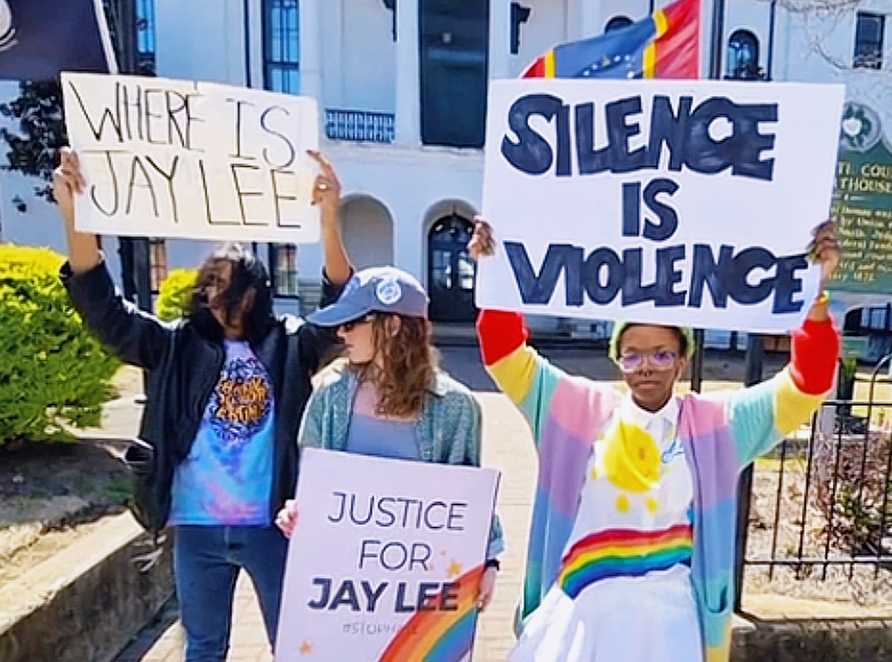
The case also drew public support. Community members organized rallies, outreach events and drives. “Justice for Jay Lee” became a repeated call. The emotional pressure intensified when Tim was released on a $250,000 bond with an ankle monitor after his lawyers filed a civil suit and the prosecution agreed to the release. To Jay’s family and friends, seeing him walk freely through Oxford felt wrong. Jay’s father said he tried to trust the legal process and continued praying with Chief McCutcheon.
Nine months after Jay vanished, a grand jury indicted Tim Harrington on upgraded charges of capital murder and kidnapping.
A Trial Without a Body
In December 2024, roughly two and a half years after Jay disappeared, Tim Harrington went on trial for his murder. Prosecutors had to prove that Jay was dead, that Tim was responsible and that the evidence met the beyond-a-reasonable-doubt standard.
The defense focused on what investigators had not found. Seven law-enforcement agencies had carried out 71 search warrants, according to the defense, but had recovered no direct physical evidence. There was no body at the time of trial, no blood, no DNA and no fibers tying Jay’s remains to Tim’s apartment, vehicle or box truck.
Defense attorney Kevin Horan challenged the state’s theory piece by piece. Investigators had searched the truck and found no evidence that Jay’s body had been inside. They had found no evidence on the wheelbarrow or shovels. The defense emphasized that the truck was not obtained until weeks after Jay went missing and that no visible cleaning had been documented.

Horan also challenged the Google search about strangulation, suggesting it could have been connected to a consensual sexual interest rather than an attack. He argued that the “down-low” message did not establish a threat and that prosecutors could not prove Jay was dead.
The prosecution relied on the accumulating pattern. Jay had gone to Tim’s apartment after an exchange that showed conflict. Tim had minimized the relationship. His phone had produced the strangulation search. Surveillance had shown him looking at large trash cans, buying duct tape, retrieving a box truck and loading tools at his parents’ home. Tim had also left the home while his phone remained behind.

The jury had to decide whether those facts formed a complete explanation or only a troubling theory.
After four hours of deliberation, jurors sent a note saying they could not reach a unanimous decision. They continued for a total of nine and a half hours. The court eventually declared a mistrial.
For Jay’s family, the result was devastating. They had waited through the investigation, the arrest and the trial without a body. Now there was no verdict. Prosecutors began preparing for a second trial and continued searching for Jay.
Seven weeks later, the search changed everything.

The Remains in the Woods
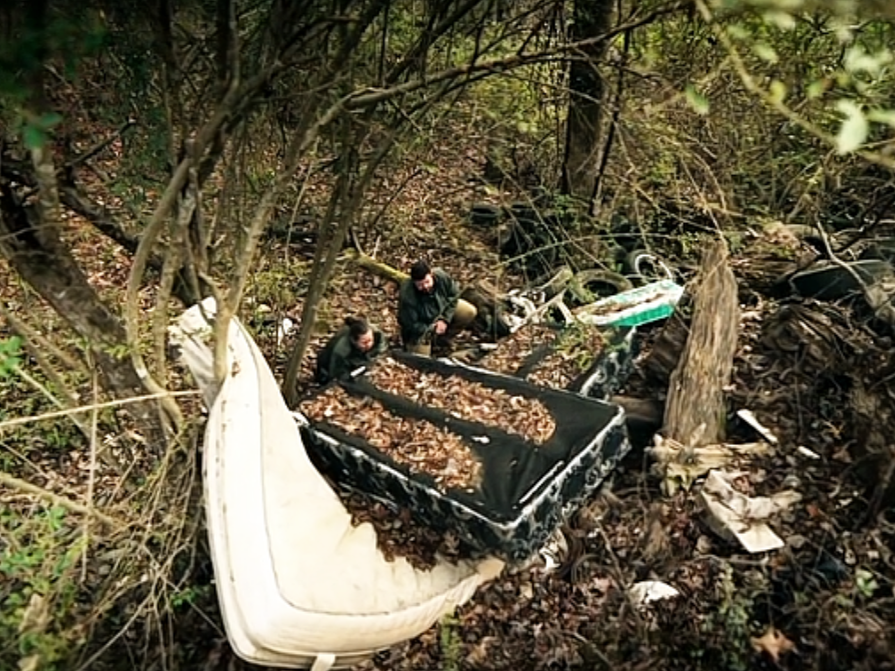
On a cold February day in 2025, about two and a half years after Jay disappeared, a property owner in a neglected wooded area roughly 20 miles from Tim Harrington’s parents’ home found what appeared to be human remains. He called 911 and carefully watched where he stepped while waiting for investigators.
Carroll County Sheriff’s investigators Jerry Bankston and Tucker Banks were among the first to arrive. They saw what appeared to be a human skull, along with additional bones near a tree. Some remains were wrapped in a blanket. Duct tape was visible on the outside of the material.
A flashlight caught something shining in the dirt. It was a gold necklace.

Chief McCutcheon recognized the significance of the image. After years of promising the Lee family that they would bring Jay home, investigators finally had a possible answer. McCutcheon called Jimmy Lee while Jimmy was driving with Stephanie. He asked him to pull over. Then he told them: “We found Jay.”
For Jay’s parents, the news brought relief and grief at the same time. They had wanted to know where their son was. They had also hoped, against the evidence accumulating around them, that he might still be alive.
Jay’s remains were identified, and the family held a funeral two weeks later. Hundreds of people attended. The gold casket reflected the style and personality his loved ones associated with him. More than anything, the funeral gave the family a measure of closure: Jay had finally come home.
The discovery did not answer every forensic question. The remains were decomposed, leaving no usable DNA evidence. The hyoid bone, which can indicate strangulation when fractured, was intact. The defense could still argue that the remains did not prove how Jay died.
But investigators had one item that could connect the woods to Tim Harrington’s apartment.
The Tape Match and the Guilty Plea
A roll of duct tape had been found in Tim’s apartment. Another section of duct tape was recovered from the site where Jay’s remains were found. Investigators sent both to the FBI for comparison.
The tear patterns matched. The edges fit together like puzzle pieces.
The tape was not merely evidence that duct tape existed in two places. The forensic comparison linked the roll recovered from Tim’s apartment to the tape wrapped around Jay’s remains. It directly strengthened the state’s argument that Tim had handled and disposed of Jay’s body.
Tim’s defense attorney, Abram Sellers, described the discovery as objectively damaging. The prosecution prepared for a second trial, but the new evidence changed Tim’s position. He became interested in a plea deal.
Prosecutors wanted more than a conviction. They wanted Tim to say what he had done. They wanted Jay’s parents to know how their son died and where he had been taken. They also wanted to spare Stephanie the pain of testifying again.

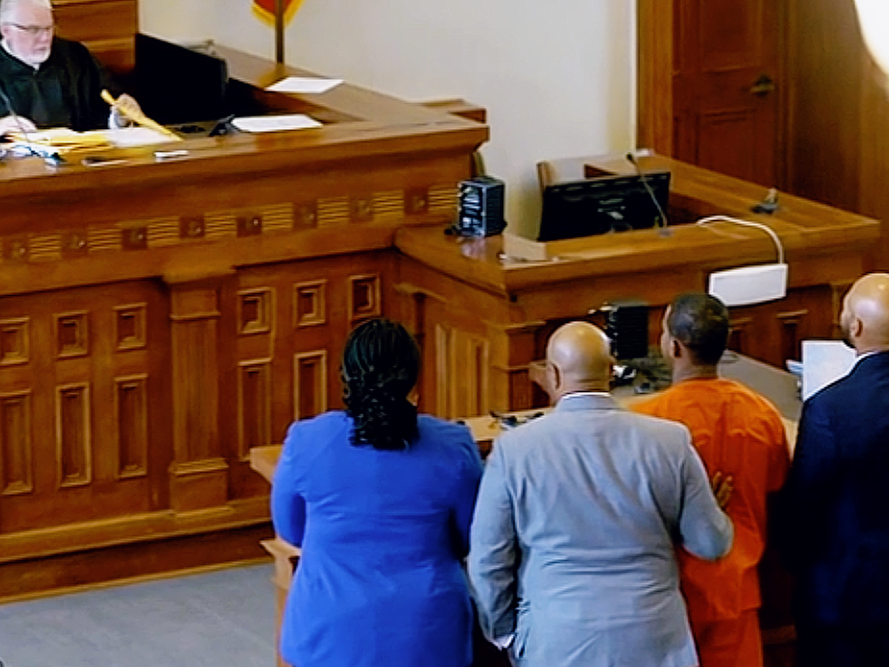
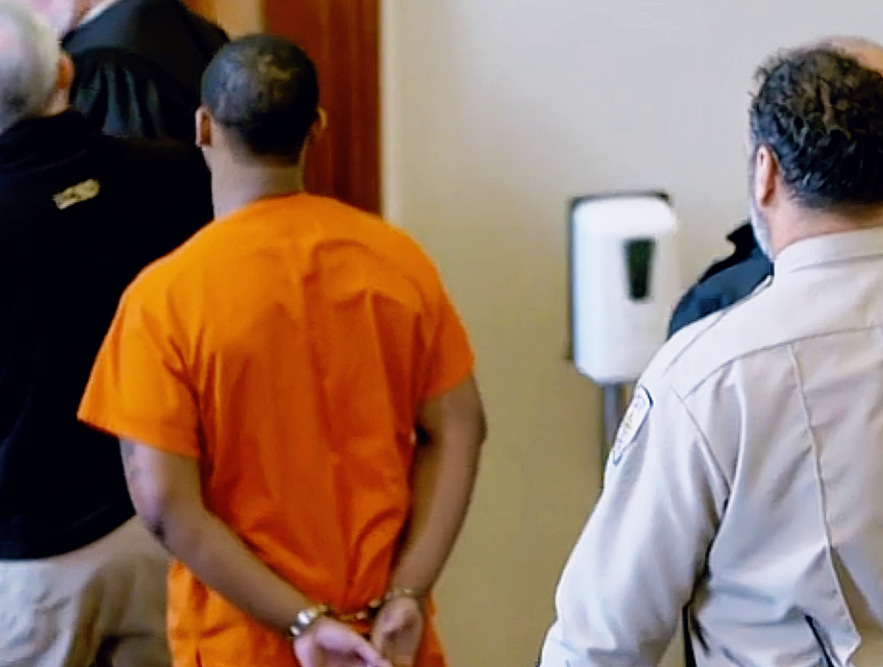
On December 1, 2025, as jury selection was beginning for the second trial, Tim Harrington pleaded guilty to second-degree murder and tampering with a body.
In a meeting with prosecutor Gwen Ago, Harrington confessed that he had strangled Jay. He said the message about being kept “on the down low” had triggered him. He told Ago that he had intended to bury Jay but panicked when he looked at Jay’s dead face. Instead, he dumped the body. He said he could not call police because he knew he had killed someone and that it was his fault.
The judge sentenced Harrington to 40 years in prison. He will be eligible for parole at age 58.
At sentencing, Jimmy Lee addressed his son’s killer. Speaking through a broken heart, he said he was sending God’s love and wanted to remind Harrington of God’s redemptive plan. The statement did not erase the harm or lessen the loss. It reflected the faith that had carried Jimmy and Stephanie through the investigation, the missing years and the trials.
Jay’s Family Seeks Change
For Jay’s family, closure became a reason to pursue policy change. They began supporting a proposed federal law called the Jay Lee Information Act. The measure would require technology companies to share user data with law enforcement and parents when someone under 21 goes missing, with the goal of helping investigators obtain leads more quickly.
The case showed how much time can be lost when investigators need access to messages, account records and location-related information. Police eventually obtained Jay’s Snapchat data through a federal warrant and an iCloud-based workaround, but the delays added pressure during the critical early days of the search.
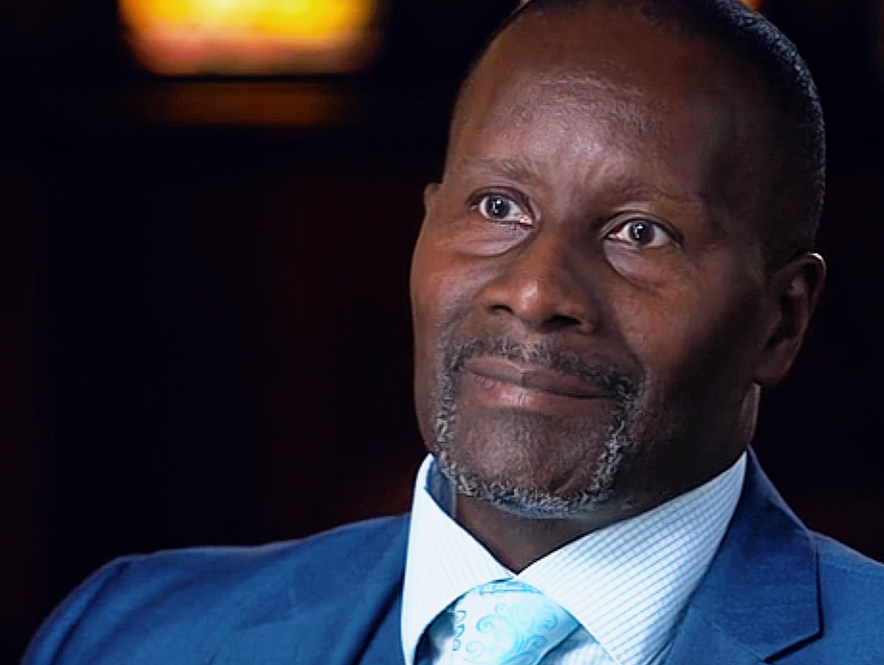
Tayla later led the Oxford Pride Parade while holding an almost life-sized photograph of Jay. The image placed his life, not only his death, at the center of the community’s memory.
Jay was a student, a son, a brother, a friend, a social-work student, a performer and a person who wanted people to know his name. His family and friends described someone who embraced visibility in a place where that could require courage. The case also exposed the fear that can surround a missing queer person and the distrust that may keep witnesses from speaking openly.

The legal outcome did not answer every broader question. It did, however, produce a conviction, a confession and a place where Jay could be buried. It also gave the community a reason to keep asking whether missing people receive equal urgency, whether digital evidence can be obtained quickly enough and whether families should have to wait years for the most basic answers.
At Tim Harrington’s sentencing, the judge acknowledged Mississippi’s reputation in cases involving people whose lives differ from the majority. Then he offered a conclusion that resonated beyond the courtroom: Mississippi, he said, got it right this time.
For Jay’s family, that statement was not about perfection. It was about persistence. They did not stop looking. Investigators did not stop building the case. Friends did not stop saying his name.
And Jay Lee finally came home.

Frequently Asked Questions
Who was Jay Lee?
Jay Lee was a 20-year-old recent graduate of the University of Mississippi in Oxford. He was a social-work student, an openly gay man, a drag performer and an active member of the Ole Miss community. His family described him as deeply faithful, academically driven and unapologetically himself.
When did Jay Lee disappear?
Jay Lee disappeared on July 8, 2022. Campus security footage showed him leaving his apartment at 4:01 a.m., returning about 30 minutes later and leaving again at approximately 5:58 a.m. He drove away in his black Ford Fusion and did not return.
Where was Jay Lee’s car found?
Jay’s Ford Fusion was found at Molly Bar Trails Apartments, an apartment complex approximately two and a half miles from his campus apartment. The car was later processed at the Mississippi Crime Lab.
Who was RedEye24?
RedEye24 was the Snapchat username used by Tim Harrington. Investigators connected the account to an email address associated with Harrington’s Dirt to Diamonds podcast.
What evidence connected Tim Harrington to Jay Lee’s disappearance?
The prosecution presented Snapchat messages, surveillance footage, Tim Harrington’s phone search about strangulation, his purchase of duct tape, the use of a box truck, the movement of a wheelbarrow and shovels, and the later forensic match between duct tape from his apartment and tape recovered with Jay’s remains.
Was Jay Lee’s body found?
Yes. Human remains were found in February 2025 in a wooded area about 20 miles from Tim Harrington’s parents’ home. A gold necklace helped investigators connect the remains to Jay, who was subsequently brought home and buried.
Did Tim Harrington confess?
Yes. Before the second trial, Tim Harrington confessed to prosecutor Gwen Ago that he had strangled Jay, panicked afterward and disposed of his body. He said a message about being kept “on the down low” had triggered him.
What was Tim Harrington’s sentence?
On December 1, 2025, Harrington pleaded guilty to second-degree murder and tampering with a body. He was sentenced to 40 years in prison and will be eligible for parole at age 58.
What is the Jay Lee Information Act?
The Jay Lee Information Act is a proposed federal measure supported by Jay’s family. As described in the source transcript, it would require technology companies to share user data with police and parents when someone under 21 goes missing, helping investigators pursue digital leads more quickly.