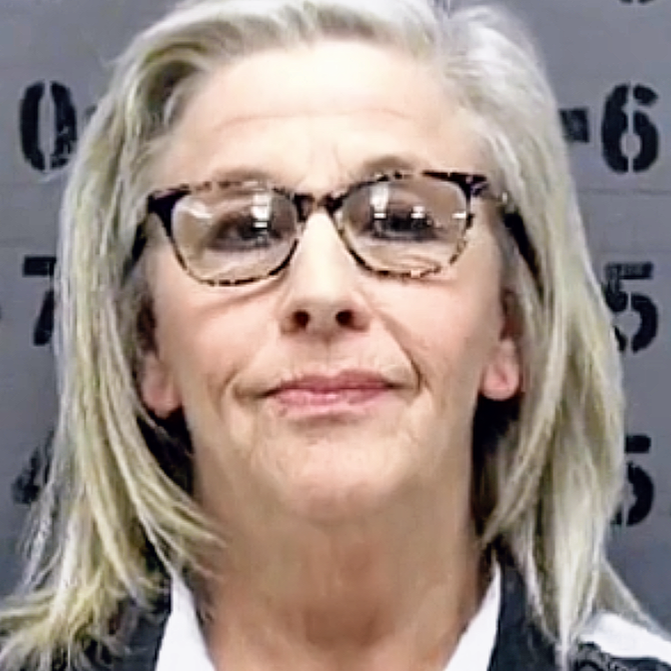
On an early January afternoon in Chambers County, Texas, Sarah Hartsfield told 911 that her husband, Joe, could not be revived. She said his blood sugar kept dropping even after emergency personnel tried to raise it. At the hospital, Joe lay unconscious in a diabetic coma while his mother and sister waited outside, unable to enter his room.
For Detective Skylar Rocks, the case began with a medical emergency that did not behave like one. Joe did not respond to standard treatment. Sarah’s account contained details that seemed ordinary until investigators tested them against phone records, hospital findings, and the history of the woman who had become Joe’s fifth wife. What followed was an investigation that reached across Texas, Missouri, and Minnesota—and ended with a jury finding Sarah Hartsfield guilty of murder and sentencing her to life in prison.
The Call From Chambers County
The story presented to emergency dispatch began with a familiar explanation. Sarah Hartsfield said Joe’s blood sugar had fallen dangerously low. Emergency medical technicians were already working on him, she said, and they were taking him to a hospital in Baytown. She described a diabetic crisis that had become impossible to reverse.
Joe’s sister, Jeannie Hartsfield, received the call and understood immediately that the situation was serious. She and Joe’s mother drove to the hospital, where Joe was unconscious. Medical staff gave him sugar water through an intravenous line, a standard response to dangerously low blood sugar. But Joe did not recover as expected.
The lack of response was the first major question. If the treatment was designed to raise his blood sugar, why did his condition continue to deteriorate? The answer was not apparent in the waiting area, where Joe’s family was left to worry. It became even less apparent when Sarah refused to let them into his room.
Jeannie later described the experience as anger mixed with helplessness. She had driven to the hospital hoping to spend time with her brother. Instead, she and Joe’s mother remained separated from him while Sarah controlled access to the room. The family’s distress became part of the first investigative picture: a husband near death, a wife offering explanations, and relatives who believed they were being shut out at the moment they most needed information.
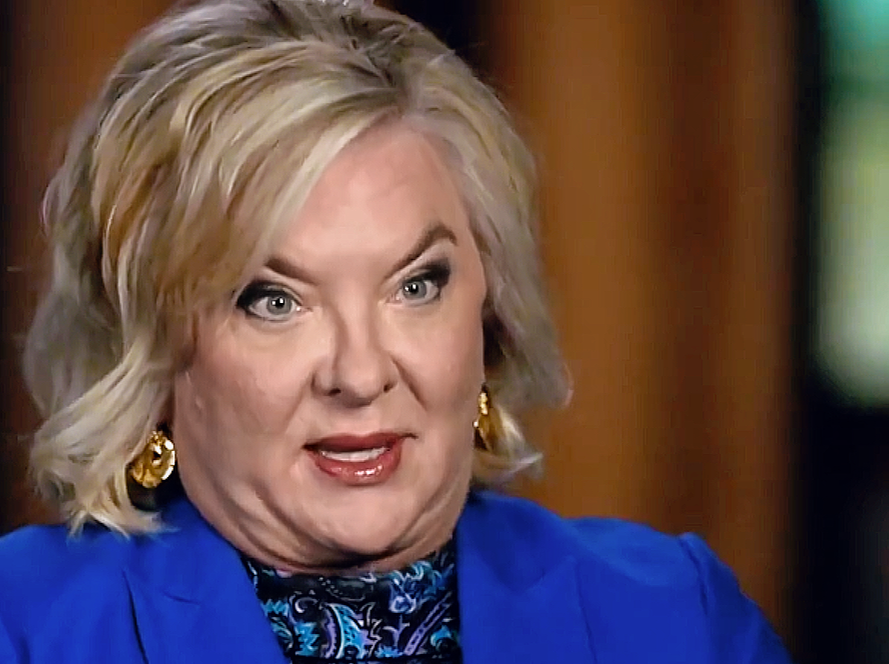
Detective Skylar Rocks was the on-call detective for the Chambers County Sheriff’s Office. She had been a detective for only six weeks. The assignment could have been treated as a medical incident unless evidence showed otherwise. Rocks, however, noticed that the account surrounding Joe’s collapse did not fit together cleanly.
Sarah told a deputy that Joe had worked a night shift and then attended a morning job interview. He was exhausted when he returned home, she said. The couple removed his clothes and put him to bed. Later, around 4:30 or 5 p.m., she fed him his favorite casserole. He was too tired to finish it, which Sarah said was unusual for him. She encouraged him to keep eating even though she knew the meal could raise his blood sugar.
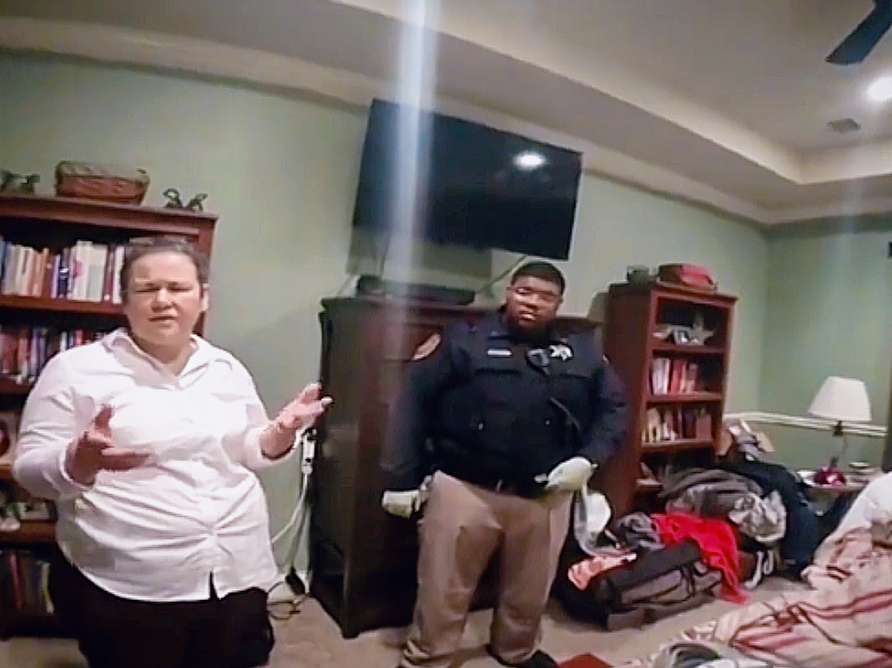
She then brought him his insulin pens. Sarah said she stayed close because Joe’s blood sugar was erratic and she did not want anything to happen while he slept. But she also said she fell asleep on a couch after taking pain medication for surgery roughly two weeks earlier. According to her account, Joe’s blood-sugar alarm continued to sound. She left a glass of orange juice nearby in case he needed a boost.
The orange juice became one of the details that later took on unusual importance. At the time, it sounded like a small act of care. Investigators would eventually examine not only whether the glass existed, but what its condition said about when it had been placed there.
Joe was taken to the hospital and remained unconscious. Eleven days after his admission, Sarah authorized the withdrawal of life support. Joe Hartsfield died. The medical crisis had become a death investigation, although the legal question of how he died would remain contested for years.

A Marriage Under Strain
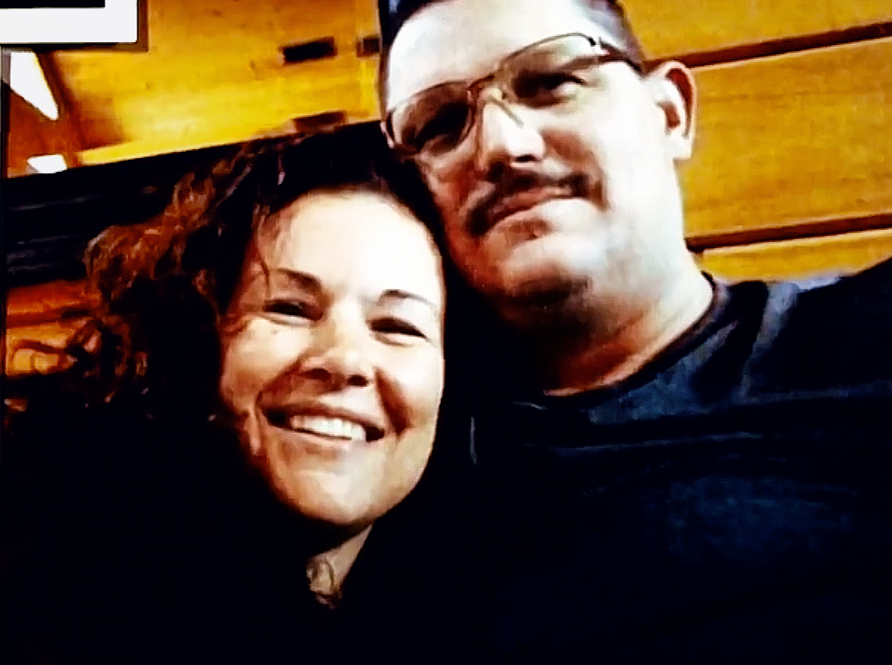
Before Sarah, Joe was described as a divorced father of two and a probation officer. He lived in a trailer on his mother’s property and was remembered by Jeannie as a large, cheerful personality. He dated often and wanted a partner. Sarah seemed to offer exactly what he was looking for.
She was a retired military mother of four who was in the process of getting divorced. When she met Joe, she appeared concerned about his diabetes and offered to help him manage his diet. Jeannie initially saw her as a positive influence. She told Joe that Sarah seemed like a good woman and that he should hold on to her.
Within months, the couple announced that they planned to marry. Yet the early impression did not last for everyone. Jeannie began receiving long text messages in which Sarah raged about Joe’s chewing-tobacco habit and other frustrations. The issue was not simply disagreement. It was the intensity of Sarah’s reactions and how quickly ordinary conflicts seemed to become emotional explosions.

Sarah and Joe bought a house in Beach City, Texas, roughly two hours south of the family home. Joe left the job he loved and began working at a chemical plant. As the couple built a life together, Jeannie believed Sarah was creating distance between Joe and his relatives.
The conflict reached a breaking point after Jeannie learned that Sarah had blocked her calls on Joe’s phone. During a confrontation, Jeannie heard what sounded like a fist striking a table. Sarah stomped away and screamed that Jeannie would never see Joe again. Jeannie later said Joe appeared defeated and told her that he wanted to leave Sarah.
Jeannie advised him to protect himself before Sarah knew what he was planning. She urged him to open a separate bank account and redirect his direct deposit. Nine days before Joe went to the hospital, he did so. That fact would become significant to prosecutors because it gave investigators a possible motive: Joe had been making practical preparations to separate his finances and potentially his life from Sarah.

Sarah gave Detective Rocks a different picture. She said she and Joe had not discussed divorce. She did acknowledge that they had decided to reduce or end contact with his family, describing Joe’s mother as overbearing and their relationship as unhealthy and codependent. In Sarah’s version, the estrangement was a mutual decision made by the couple.
The detective also noticed the insulin supplies in the bedroom. She saw approximately eight to ten insulin pens and questioned Sarah about them. The scene did not establish by itself who had administered what medication or when. It did, however, place the medical tools central to Joe’s condition in the middle of a relationship already marked by separation, control, and conflicting accounts.

The Rookie Detective Who Would Not Let Go
Rocks did not initially have proof of a crime. She had an uneasy interview, a family that was angry, and a medical emergency that did not make sense. Her supervisors told her there was not enough evidence and cautioned her against pursuing a theory without support. Rocks disagreed.
Her objection was not based on a claim that instinct alone could prove murder. It was based on the fact that she had been present with Sarah, read the room, and heard the explanations firsthand. Rocks said Sarah could shift from appearing sad to speaking casually within seconds. The detective acknowledged that people respond to trauma differently, but she found the repeated changes unsettling.
Rocks also recognized that suspicion and proof were not the same. She could not simply label Sarah a liar because Sarah’s behavior felt wrong. She needed independent evidence. That search led her into Sarah’s history.
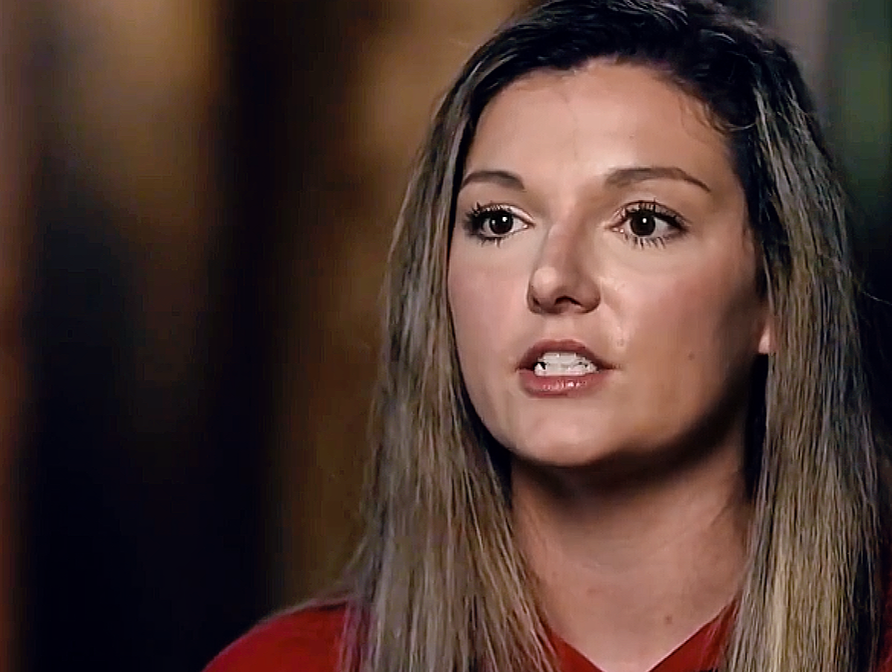
A law-enforcement database showed five marriages, including Joe’s. The discovery changed the scale of the inquiry. What began as a question about one diabetic coma now required investigators to understand a pattern of relationships, accusations, injuries, fires, and deaths connected to Sarah’s past. The prior incidents did not automatically prove what happened to Joe. They did explain why Rocks continued asking questions after others believed the case should be closed.
The investigation also exposed the danger of treating charm as evidence of innocence. Former partners and friends described Sarah as persuasive and said her warmth could turn to cruelty when she was challenged or rejected. That contrast mattered because the case depended heavily on credibility. The defense emphasized her military career and the absence of charges in the earlier incidents; prosecutors argued those incidents showed a recurring response to rejection and resistance.
The Past Sarah Left Behind
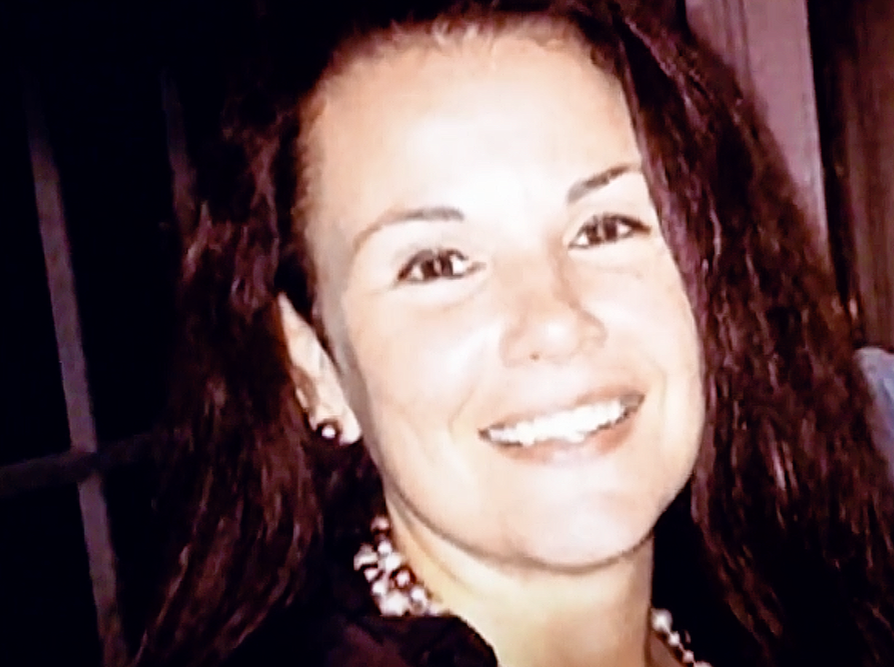
Sarah was born Sarah Smith in rural Missouri in 1975. The transcript describes a childhood marked by poverty, family instability, and serious allegations. A younger brother was found dead, hanging from a stair rail by a dog leash. Police investigated and concluded that the death was an accident.
Sarah also alleged that she had been sexually abused as a young child. Her mother removed Sarah’s father from the home and filed for divorce. After Sarah’s mother remarried, Sarah accused her stepfather of molestation as well. He was acquitted after a trial.
At age 11, Sarah entered foster care. Her mother brought her to child services and said she could not handle her. Foster parents Barbara Stewart and Steve Stewart described Sarah as someone they accepted into their family. Barbara recalled that they were close and that Sarah fit into the household.

The foster family also noticed that Sarah sometimes told stories that benefited her. The transcript does not present a clinical diagnosis or claim that her childhood caused later conduct; it presents background witnesses used to assess her relationships and accounts.
Sarah married Titus Knerchold shortly after graduating from high school. She was 18. A month after the wedding, Titus joined the Army. During the marriage, he learned that Sarah was having affairs. After their divorce, Titus believed the relationship was over. But he later said problems continued when he began dating Angela, the woman he would eventually marry.
Titus and Angela reported that all four of Angela’s tires were flattened and laundry detergent was put into the gas tank of her car. People allegedly saw Sarah near the vehicle, but Titus said police repeatedly accepted Sarah’s explanation that the couple was responsible for the conflict. Angela later said she saw gasoline splashed across the front of the house and observed Sarah leaving the area.
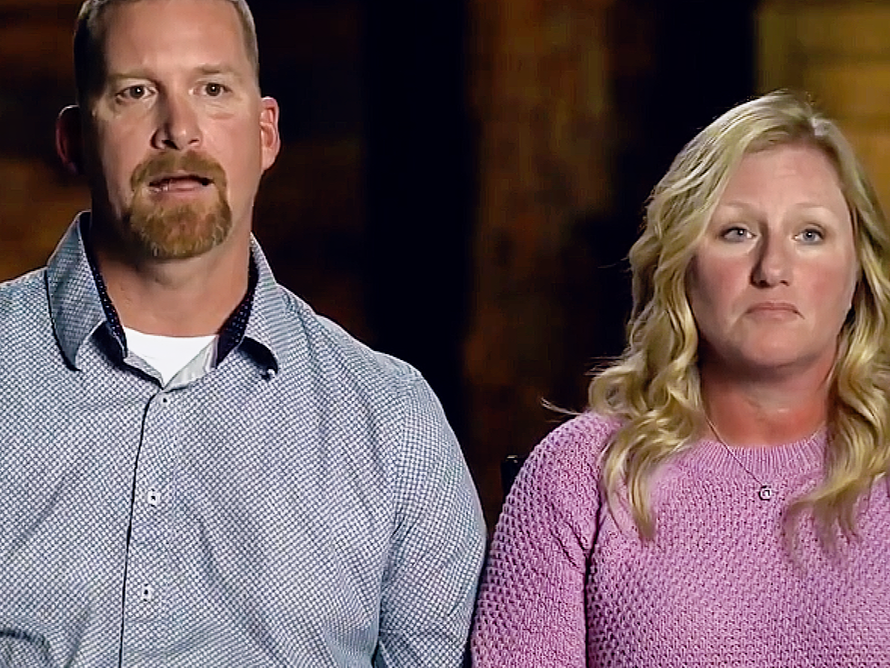
The couple reported the incident to police. They were told the matter would amount to arson only if a fire had actually been set. Sarah denied the allegations and was not charged. She later married one of Titus’s friends and joined the Army at 22.
For a time, Sarah appeared to have built a stable life. She married Chris Donahue, another soldier, and they had children. Her friend Hannah Williamson remembered an immaculate home, while Ashley and Ryan described a family that looked perfect to neighbors.
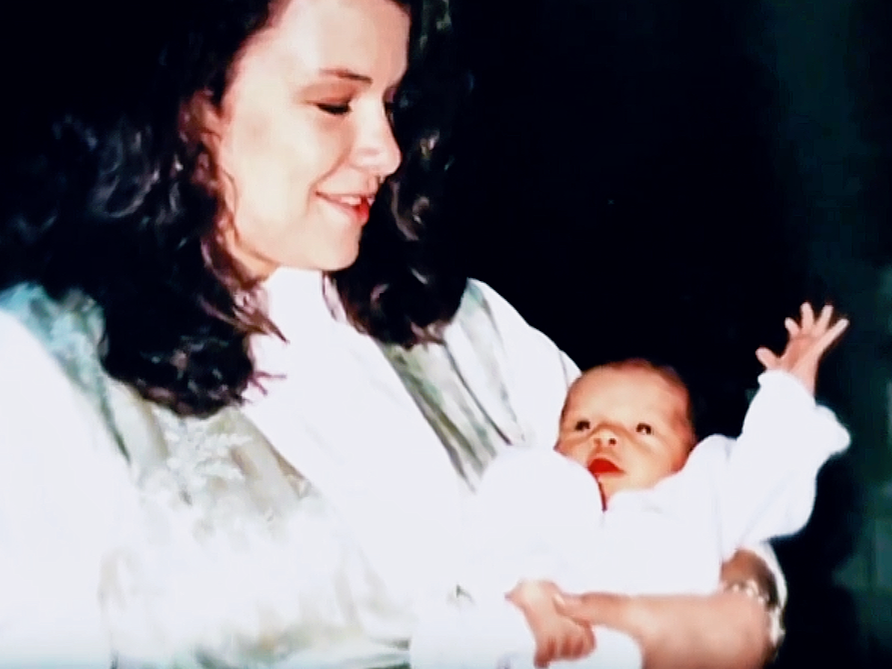
Inside the home, the children described something different. Sarah demanded obedience and insisted that what happened there stay there. Ryan said her anger could go from zero to 100. He recalled hearing children being hit and described a beating that began with a belt and continued with punches after he broke a wall hook. During a 2007 deployment to Iraq, Sarah and Chris were away and Ashley and Ryan stayed with Barbara Stewart, who said the children did not behave as though they missed their mother. These accounts later became relevant during the punishment phase, not as proof of how Joe received insulin, but as evidence of the family environment prosecutors said Sarah created.
Fires, Accusations, and David Bragg’s Death
By the summer of 2016, Brian Altus had become part of Sarah’s complicated relationship history. The two had known each other as children and reconnected during the funeral for Sarah’s grandmother. Sarah told Brian that she and Chris would divorce, although she was still married to Chris.
Brian said Sarah made him feel important and attractive. He described her as someone who could persuade a person to believe that up was down. Over time, however, the relationship became hostile. The two filed restraining orders against each other. When Sarah presented a positive pregnancy test, Brian questioned whether it was legitimate and asked her to take another test with him. She refused.
They argued outside his home. Sarah eventually agreed to leave, but asked to use the bathroom first. Brian allowed her inside. After he went to a local bar, he received a call from police saying his house was on fire. Firefighters stopped the building from burning completely, but the bedroom suffered major damage.
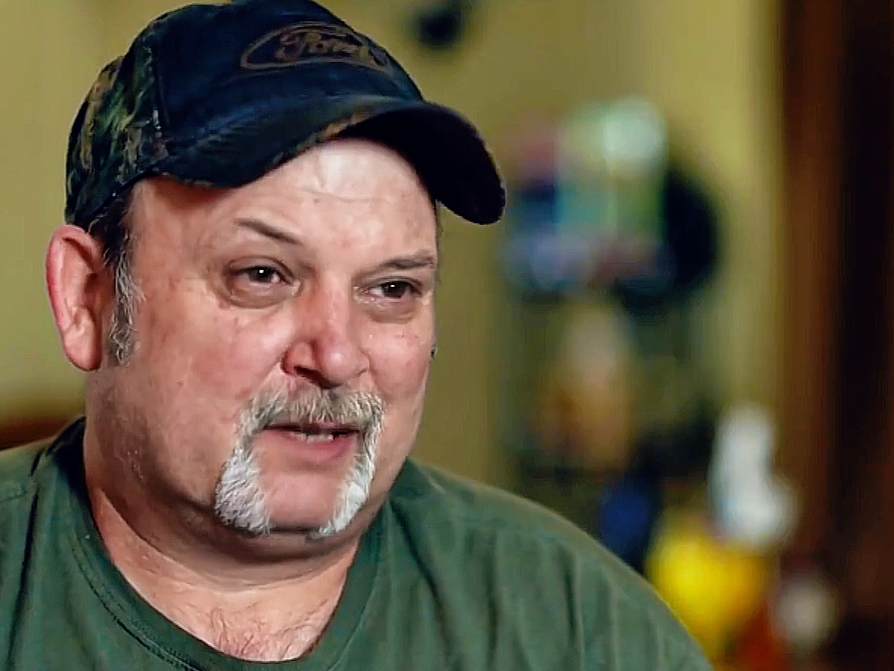
Brian said Sarah denied responsibility and suggested that one of his relatives might have started the fire. No charge followed. To Rocks, however, the incident joined a pattern that included the Missouri house fire and the gasoline incident at Titus’s home.
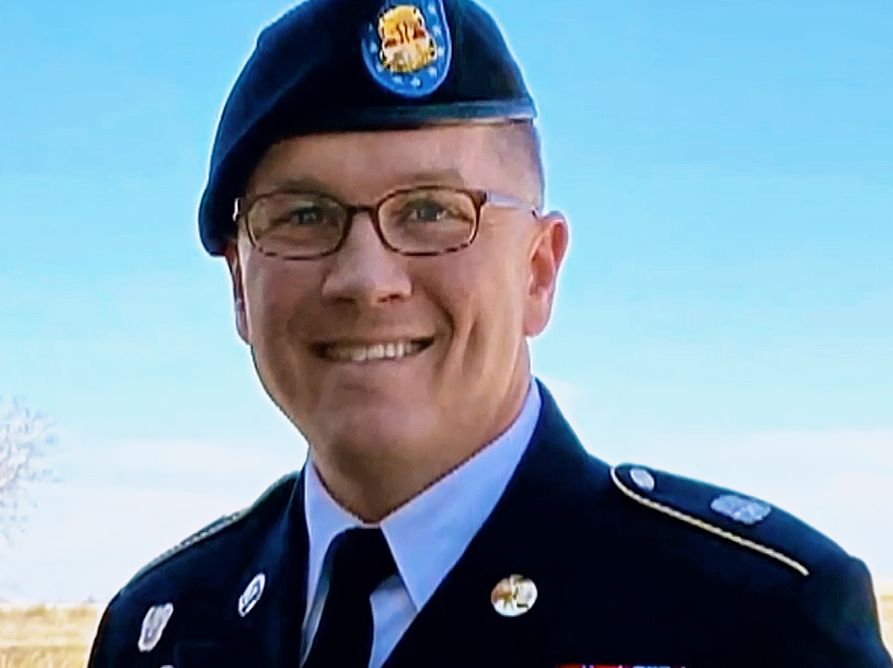
In 2016, Sarah met David Bragg, an Army contractor who worked on solar panels. David’s mother, Doris Swart, said he was immediately captivated by Sarah. At the time, Sarah was still married to Chris, who was stationed in Korea. David began staying at the home.
Ashley, then 17, informed Chris that another man was sleeping in his bedroom. Chris returned from Korea with Ashley’s help and found Sarah and David together. He went back to Korea, and Sarah soon claimed that she had a brain tumor and could not be around the children because of radiation from treatment. She left for two months and placed Ashley in charge, while Ashley believed Sarah remained with David.

David and Sarah later moved to Garfield, Minnesota, where they lived in an old farmhouse. They became engaged. Family members said Sarah’s demands intensified as David restored the property. Doris said Sarah gave David Ritalin to increase his energy and later gave him Ambien so he could sleep. She also saw Sarah scream at the children and at David.
David’s family believed he was trying to make the relationship work. Eventually, relatives noticed that he wanted out. In May 2018, Sarah and David argued. Her account of what happened became central to the later trial.
Sarah told Hannah that she had placed two guns in her car and returned them to the house. She said one gun was in a sweater pocket when she confronted David. According to her account, the two wrestled over the weapon. She said David fired at her, causing her to fall, and that the second gun fell from her clothing. From the ground, she said, she pulled the second weapon and fired backward without looking, emptying the rounds.

She gave Ryan a similar but slightly different description, saying she crouched near a stair railing and fired blindly over it. Sarah later told officials that she had hit David in the center of the body. Hannah, who had experience with firearms, said the account did not make sense. She told investigators that Sarah had been heading directly toward a confrontation with a cocked gun.
David Bragg died. Sarah was not charged at the time. She told Hannah that police never suspected foul play and that she had been taken to the station in the front seat of a police car. The transcript says Douglas County investigated, but the case did not result in charges before Sarah’s arrest in Texas.
The Attempted Hit Allegation
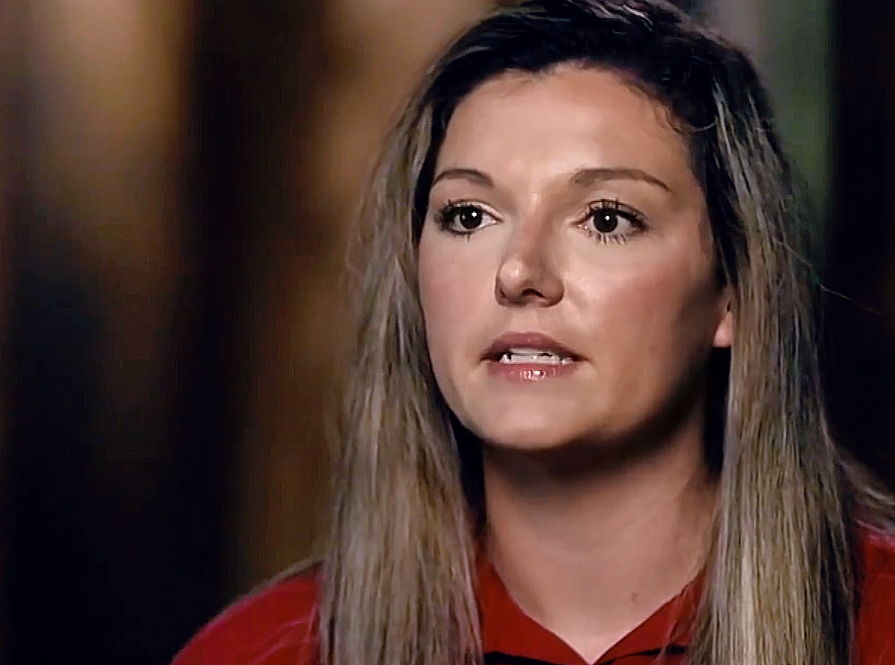
After David Bragg’s death, Sarah’s history continued through another marriage and another conflict. She married David George, who lived in Minnesota. Sarah’s daughter Ashley later told investigators that George said Sarah wanted Chris Donahue’s new wife, Heather, killed.
The alleged plan was specific. George was supposedly to knock on the door, wait for Heather to answer, and shoot her. Ashley said George did not want to do it, while Sarah continued pressuring him. The urgency increased when Chris realized that he had already met George face to face.
Doorbell video showed George arriving at Chris and Heather’s home in Arizona. He traveled from Minnesota and appeared at the door with flowers addressed to Heather. The encounter was recorded. George did not return to the residence. He later denied that he intended to kill anyone, and he declined an on-camera interview.

Chris contacted the FBI. George initially admitted to federal investigators what he had been doing, according to the transcript, but later recanted and said the story was a lie. The United States Attorney declined to prosecute because the case lacked the evidence needed to proceed. Chris did obtain a protective order barring Sarah from approaching him and their two youngest children.
Sarah offered a different explanation to her friend Hannah. She said George had been expelled from the home because of an online relationship with another woman and claimed Ashley was trying to destroy her chance at happiness. As in the earlier incidents, the same events carried opposing meanings depending on who told the story.
The attempted-hit allegation was never the charge that brought Sarah to trial. Prosecutors used it as context for what they described as a pattern of retaliation after rejection. The defense countered that accusations were not convictions and could not substitute for proof in Joe’s case.

The Evidence in Joe’s Phone and Home
Rocks eventually focused on the hours before Joe’s collapse. Sarah had told investigators that she was asleep on pain medication and did not recognize how serious Joe’s condition had become. Her account suggested that she was largely unaware of the repeated low-blood-sugar alerts.
The physical scene challenged part of that story. The glass of orange juice was present, but the remaining juice was dried at the bottom and contained black specks described as mold. That did not by itself prove when Sarah placed the glass there. It did make the account difficult to accept as a fresh response to Joe’s emergency.
A more significant contradiction came from phone data. Sarah said she had been asleep from roughly 5 a.m. until 1 p.m. During that time, however, investigators found digital traces showing activity on the USAA banking application, Facebook, Realtor.com, and ZipRecruiter. She also ordered a grocery delivery.
The data showed that Sarah was using her phone while Joe’s blood-sugar monitor generated alerts. The notifications reportedly arrived every five minutes, with a total of 124 alerts identified in the period under review. Sarah received them, investigators said, but did not act on them in a way that prevented Joe’s deterioration.
Investigators also found that soon after Joe entered diabetic shock, Sarah changed settings on his phone and made herself the beneficiary of his digital legacy. If Joe died, the arrangement would give her rights to his Apple iCloud, Apple ID, and Apple devices.
Sarah told her daughter that Joe snored so loudly she had to sleep on the couch and attached a recording as proof. But the phone remained in Sarah’s hand while the alerts continued. The evidence did not answer every question about the insulin itself; it did contradict her claim that she had been unaware and asleep.
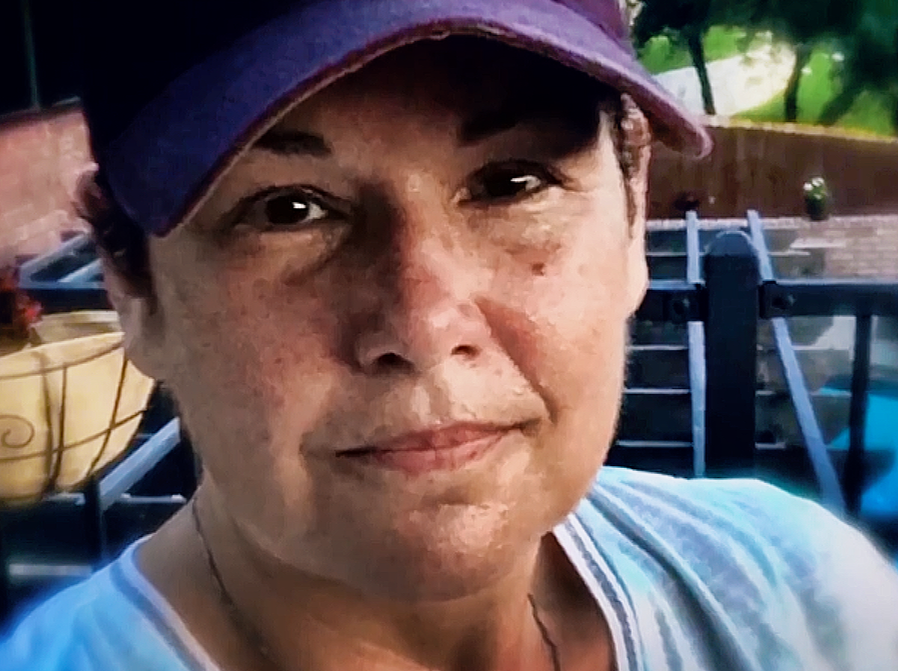
The district attorney, Cheryl Leake Henry, listened as Rocks explained the medical findings and the digital evidence. Joe had too much insulin in his body. Sarah had kept his family from him. She had described the condition as a stroke in a Facebook post, even though medical records showed that Joe had not suffered a stroke.
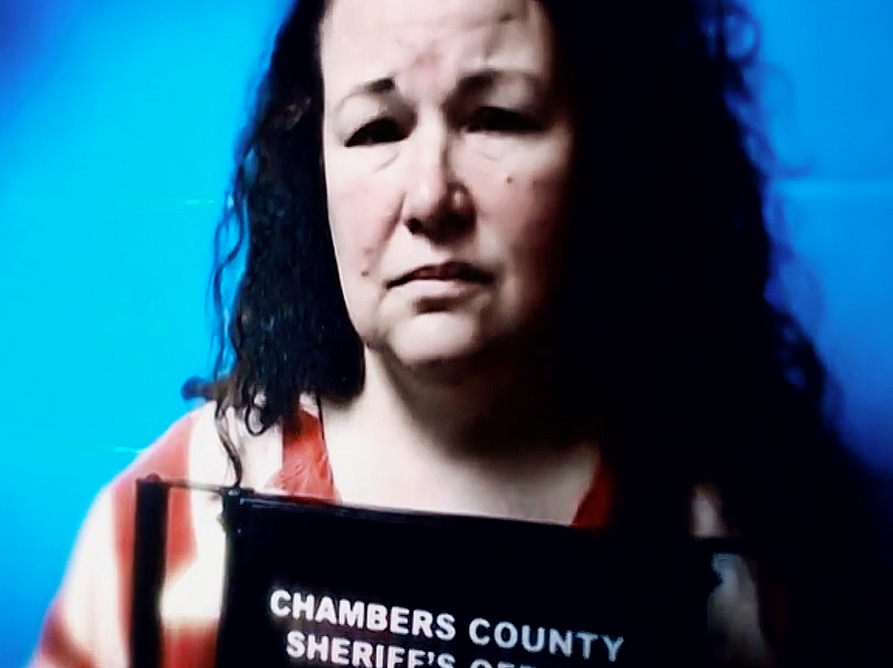
The case moved quickly once investigators feared Sarah might leave. They learned she had spoken with a realtor about putting the house on the market. A grand jury returned an indictment in early February 2023. Sarah was arrested on February 3, 2023—19 days after Joe died and one day after her 48th birthday.
When Sarah called Ashley from jail, Ashley asked what she had done. Sarah said she had been arrested for murder. Ashley later described the emotional weight of accepting that something was seriously wrong. Joe’s mother said she was devastated that Sarah might have killed another man after avoiding consequences in the earlier death. Jeannie said she was both happy and emotional when Sarah was arrested.
Sarah maintained that the arrest was a mistake. In a message from jail, she described herself as a 20-year combat veteran with a top-secret security clearance. She said she was innocent, had always loved Joseph, and was devastated by his death.
Arrest, Pressure, and Trial
Sarah waited two and a half years for her case to reach a jury. During that period, she continued trying to influence Ashley. The conversations were emotionally charged. Sarah asked whether Ashley supported her and whether Ashley believed she had done anything to hurt Joe. Ashley struggled to answer. She said she did not know.
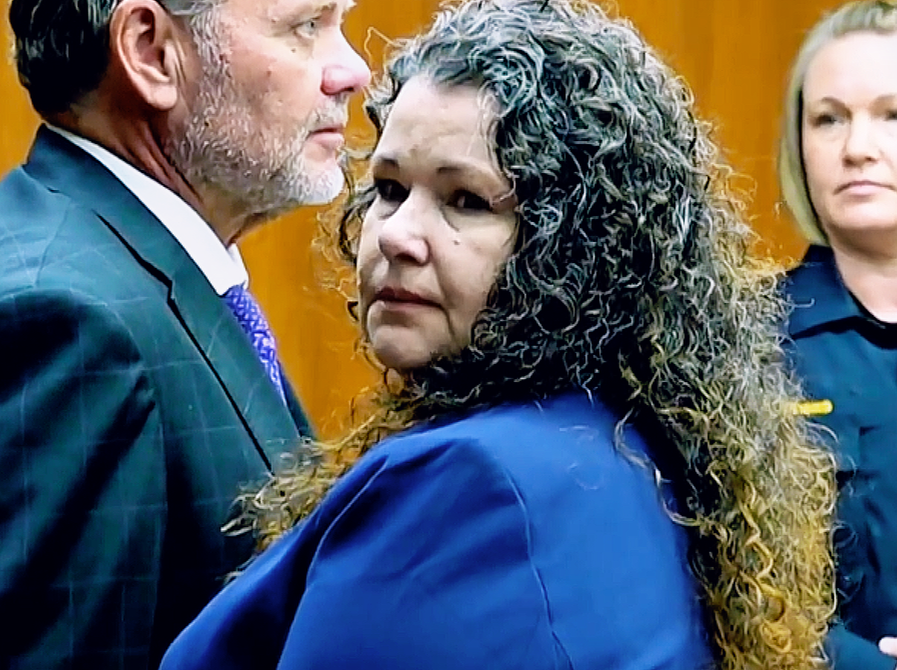
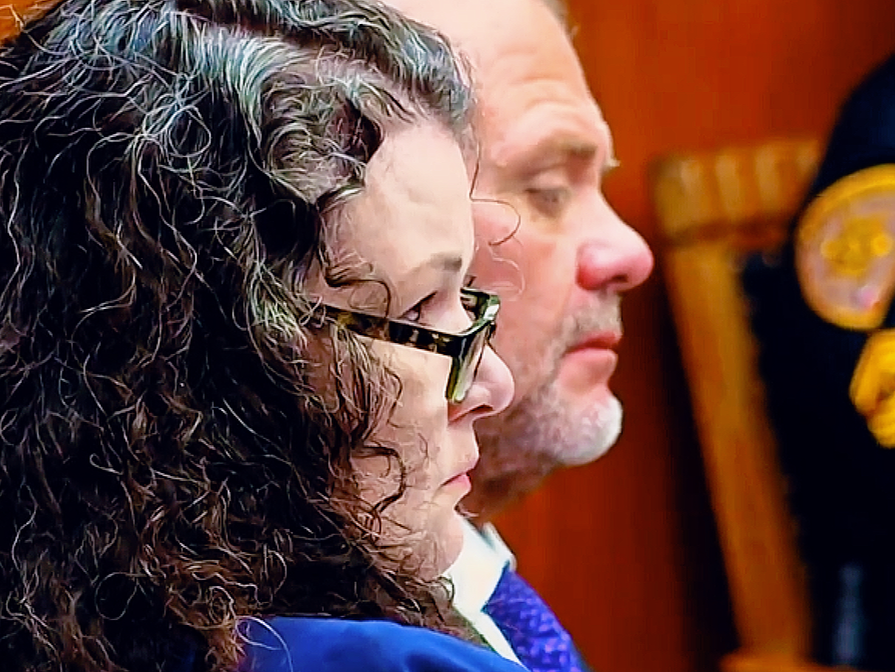
On September 30, 2025, Sarah entered court with a Bible. Prosecutor Mallory Vargas argued that Sarah relied on deceptions, partial truths, and performance. In the state’s view, Sarah could be convincing if people failed to ask too many questions or made the mistake of accepting the first version of events.
The judge allowed the prosecution to present evidence of prior acts under a Texas rule concerning habitual bad acts. That decision was important. Without the earlier incidents, the state’s case would have centered almost entirely on the insulin evidence and the disputed timeline surrounding Joe’s collapse.
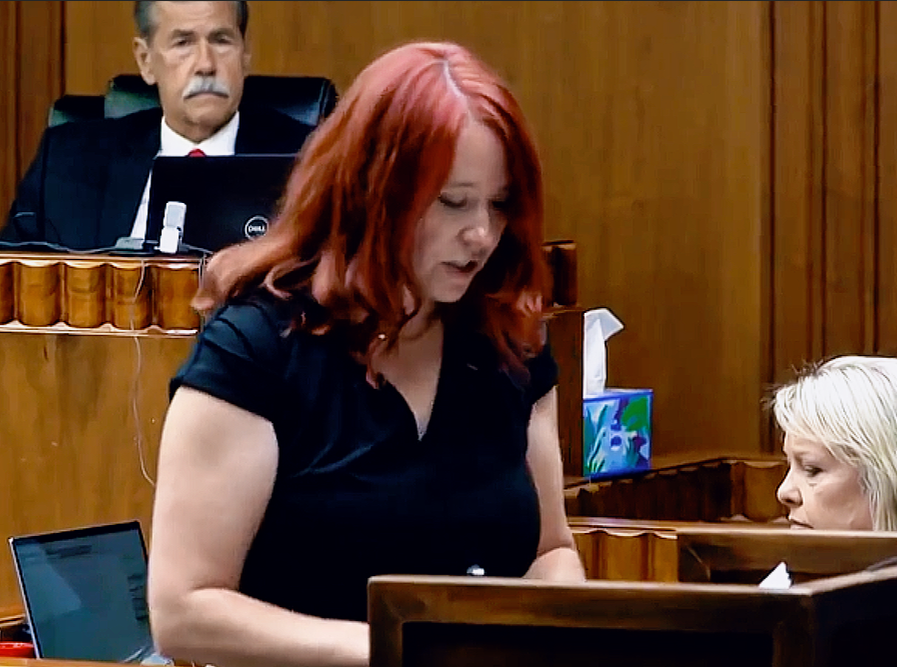
Doris testified about David Bragg’s death and said Sarah knew David wanted to leave before the shooting. She rejected the idea that David had fired at Sarah in the manner Sarah described, saying David was an excellent shot. Doris also testified that Sarah had told her the Missouri house was burned so Cody could not have it.
Cody testified about that fire. Brian testified about the fire at his home. Titus testified about the gasoline incident. Chris testified about the alleged plan involving Heather. Together, the witnesses described relationships that ended in intimidation, destruction, violence, or fear.
Sarah’s children also testified. Emma said she heard about the alleged plan against Heather but was too afraid to tell anyone. Hannah said she saw her mother moving toward David Bragg with a gun ready. Ashley described what she knew about Joe’s financial preparations and her mother’s reaction to conflict. The testimony placed the children inside the emotional consequences of Sarah’s relationships.
The prosecution argued that Joe was preparing to leave. He had changed his direct deposit and opened a separate account. Sarah, prosecutors said, wanted to leave too but was angry about the debts she associated with him. The state’s theory was that Joe’s decision to separate threatened Sarah’s control over the relationship.
The defense focused on the gap in the state’s proof. Attorney Darwin argued that no one had shown that Sarah administered the insulin. He emphasized that the medical examiner found an insulin overdose but did not determine how the insulin entered Joe’s body. The death was classified as undetermined rather than homicide.
That distinction mattered. The defense suggested Joe could have administered the dose himself, accidentally or through poor management of his diabetes. The transcript states that Joe had previously been hospitalized for high blood sugar and had struggled to control his condition. The detective had not collected the insulin pens, and the state admitted it could not prove the method of administration.
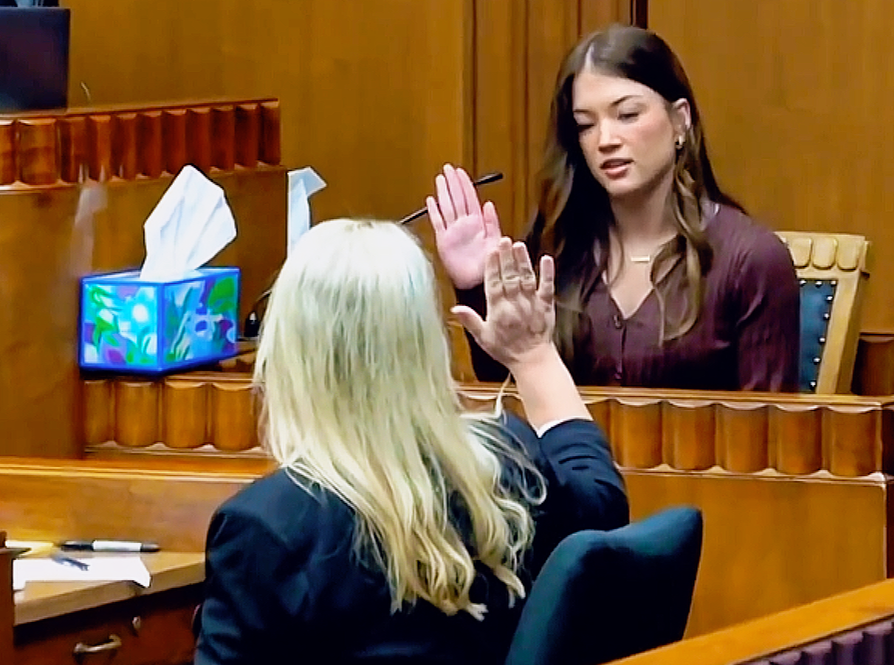
The defense also presented Sarah as an Army veteran with a successful military career and no prior convictions for the incidents described at trial. The argument was simple: troubling stories are not proof beyond a reasonable doubt.
Sarah planned to testify. She arrived with several pages of questions she wanted her lawyer to ask. Lynn Marie Garcia, a private investigator on the defense team, had been monitoring the jury’s reaction. Garcia believed the jury already disliked Sarah and would not be persuaded by her testimony. She warned Sarah that cross-examination by Vargas would be damaging.
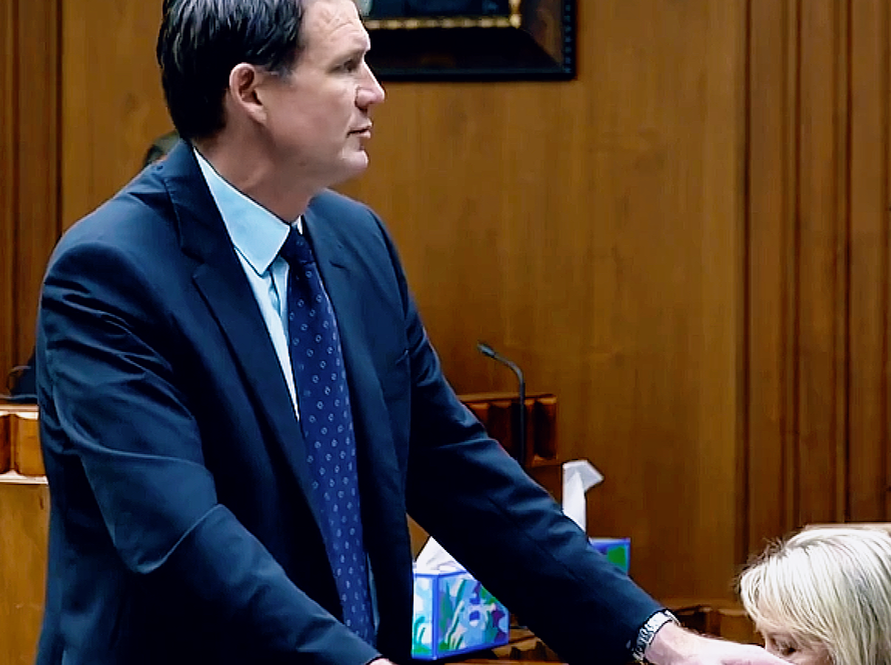
Sarah chose not to testify. Darwin told jurors that the record was filled with doubt and that there was no evidence, in his words, that Sarah administered insulin. He asked for a not-guilty verdict.
Why the Jury Convicted Sarah Hartsfield
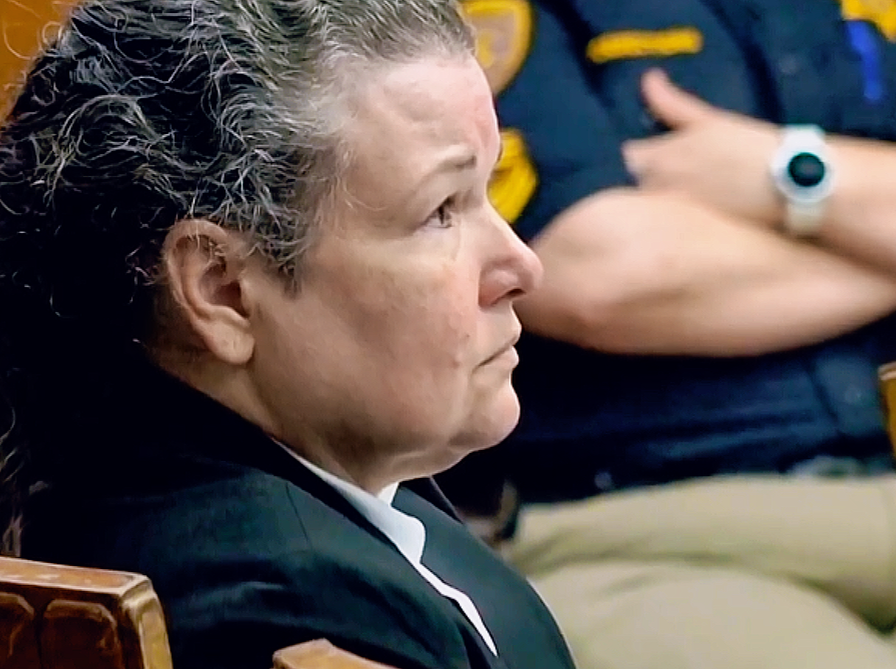
The jury deliberated for approximately an hour, including a lunch break. Then the judge announced the verdict: Sarah Hartsfield was guilty of the offense of murder as alleged in the indictment.
The conviction did not mean every allegation introduced at trial had been proven as a separate crime. It meant the jury found the evidence sufficient to establish Sarah’s guilt in Joe Hartsfield’s death. The state’s case combined the medical evidence, the digital timeline, contradictions in Sarah’s statements, Joe’s planned separation, and testimony about earlier relationships.
The defense’s strongest argument was the absence of direct proof showing who administered the insulin. The prosecution’s strongest answer was that a criminal case can be proven through circumstantial evidence. Sarah’s phone activity contradicted her claim of being asleep. The alerts showed repeated notice of Joe’s condition. The timing of changes to Joe’s digital accounts suggested preparation for his death. The family’s exclusion from the hospital room and Sarah’s inconsistent public explanation added to the state’s narrative.
The jury ultimately accepted the prosecution’s interpretation rather than the defense’s alternative explanation. Although the medical examiner could identify the overdose but not the precise mechanism, jurors treated the surrounding conduct as meaningful evidence of intent and responsibility.
The punishment phase followed the guilty verdict. In Texas, sentencing was conducted as a separate proceeding. The jury heard additional testimony about Sarah’s violence toward her children. Witnesses described belts, wooden spoons, punches, and a knife that struck a wall during one confrontation.
The prosecution argued that Sarah was unfit to remain in the community. Jurors had the option of imposing a sentence ranging from five to 99 years or life in prison. They chose life.
For families connected to the earlier allegations, the sentence brought mixed feelings. Some had once wanted the harshest possible punishment. After meeting Sarah’s children and hearing what they had endured, at least one witness said she did not wish a death sentence on them. Life in prison felt like justice without creating another loss for the children.

Life in Prison and the Cases Still Open
After sentencing, District Attorney Cheryl Leake Henry urged law-enforcement agencies in other jurisdictions to revisit the cases connected to Sarah. The Douglas County, Minnesota, Sheriff’s Office reopened the investigation into David Bragg’s shooting.
A separate investigation involves David George’s former partner, Rebecca. George had been in a 25-year relationship with Rebecca before meeting Sarah. Rebecca died not long after Sarah and George met. George said Rebecca died from a heart-valve problem. Seven months later, the house he had shared with Rebecca burned down. George said he and Sarah were out of state when the fire occurred.
Following Sarah’s arrest in Texas, the Todd County Sheriff’s Office reopened investigations into Rebecca’s death and the house fire. The transcript does not report additional charges or a final ruling in either matter. Those events remain allegations and open investigative questions, not established convictions.

The same caution applies to David Bragg’s death, the earlier fires, and the alleged plot against Heather. The Texas jury convicted Sarah in Joe’s murder. It did not resolve every unresolved incident connected to her past.
The episode’s closing discussion considered whether female predators can evade attention in systems dominated by male investigators. That should not become a shortcut in other cases: gender, charm, or multiple marriages does not prove guilt. Here, the jury evaluated medical findings, phone data, financial preparation, contradictory accounts, and witness testimony.
For Joe Hartsfield’s family, the question began with a low-blood-sugar emergency and ended with a murder conviction. For Skylar Rocks, it became the defining investigation of an early career. Sarah is serving a life sentence for Joe’s murder, while the other deaths, fires, and alleged attacks remain matters for separate evidence and decisions.
FAQ
Who was Sarah Hartsfield?
Sarah Hartsfield was a retired Army veteran and mother who had been married five times, including to Joe Hartsfield. She was convicted in Texas of murdering Joe through an insulin overdose and received a life sentence.
Who was Joe Hartsfield?
Joe Hartsfield was Sarah’s fifth husband. He was a divorced father of two, a probation officer, and later a chemical-plant worker. He had diabetes and died after entering a coma caused by dangerously low blood sugar.
How did Joe Hartsfield die?
The medical examiner determined that Joe died from an insulin overdose. The report did not establish how the insulin was administered and classified the manner of death as undetermined. Prosecutors argued Sarah gave him the fatal dose; the defense argued he may have administered it himself. The jury convicted Sarah of murder.
When was Sarah Hartsfield arrested?
Sarah Hartsfield was arrested on February 3, 2023. The transcript states that the arrest occurred 19 days after Joe’s death and one day after Sarah’s 48th birthday.
What evidence was used against Sarah Hartsfield?
The prosecution relied on medical evidence, Sarah’s phone activity, repeated low-blood-sugar alerts, changes to Joe’s digital-account settings, financial preparations Joe had made before his collapse, inconsistencies in Sarah’s statements, and testimony about prior relationships and alleged violence.
Did Sarah Hartsfield testify at trial?
No. Sarah planned to testify but ultimately did not take the witness stand after her defense team warned that cross-examination could harm her case.
What was Sarah Hartsfield’s sentence?
A Texas jury sentenced Sarah Hartsfield to life in prison after finding her guilty of murder.
Was Sarah convicted in the other deaths or fires discussed in the case?
No. The transcript describes prior allegations involving David Bragg, fires, and other incidents, but it does not report convictions for those events. The Douglas County, Minnesota, Sheriff’s Office reopened the investigation into David Bragg’s shooting, and the Todd County Sheriff’s Office reopened investigations into Rebecca’s death and a later house fire.
What happened to Detective Skylar Rocks?
Skylar Rocks led the early investigation into Joe’s death while she was a newly minted detective. She continued pursuing the case after supervisors initially believed there was insufficient evidence. Her work eventually contributed to the prosecution that resulted in Sarah’s conviction.